
We grind out failing mortar and restore your brick joints to a clean, tight finish. GTA Masonry serves homeowners in Stoney Creek, Hamilton, and nearby neighborhoods.
Mortar is the material packed between each row of bricks. It is made from sand, cement, and lime. Bricks are strong and can last 100 years or more. The mortar between them does not last as long. After 20 to 30 years, weather and frost cause the mortar to crumble and fall out. This means rain gets behind the bricks and soaks through to your interior walls. GTA Masonry scrapes out the failing material, mixes mortar to match your original wall, and packs the joints tightly. We serve homeowners in Stoney Creek, Old Town, Stoney Creek Mountain, Winona, and Fruitland. Our repairs stop leaks and restore the look of your brickwork.
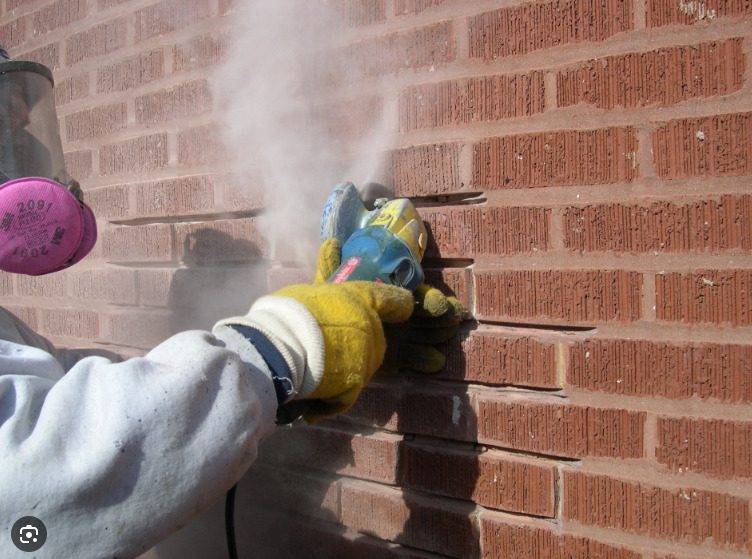
Tuckpointing is a precision job. The materials need to match. The joints need to be packed correctly. Here is what GTA Masonry does differently from a standard masonry patch job.
We chip out a small piece of your existing mortar before ordering materials. We look at the sand grain size, the lime content, and the color. Also, we mix a small test batch and let it dry on a tile before committing to the wall. This means the new mortar matches the old one as closely as possible.
Grinding brick mortar creates a fine silica dust that can reach your windows and garden. We attach vacuum shrouds directly to the grinder blades. Next, these shrouds capture the dust as it is released at the joint face. This keeps your property clean.
Some bricks are stronger than the mortar around them. Others are not. Older homes in Old Town Stoney Creek were built with soft clay bricks that need a flexible lime mortar. Using hard cement mortar on soft bricks cracks the brick face within a few seasons.
Pushing mortar into a joint in one thick pass leaves hollow spots in the center. We apply mortar in thin layers and compress each pass before adding the next. This fills the joint completely and creates a solid bond with the surrounding bricks.
GTA Masonry restores mortar joints on walls, chimneys, foundations, and fireplace surrounds. Here are the specific services we do.
The mortar joints between your bricks have crumbled and opened. Rain is getting in. We grind the joints to a clean half-inch depth, flush out the dust, and pack fresh mortar into each opening. This seals the brickwork and stops water from reaching the inside of the wall.
This is a decorative finish used on older and heritage properties. We fill the joint with mortar that matches the brick color. Next, we scribe a thin line of contrasting lime putty down the center. This makes each joint look straight, narrow, and well-crafted.
Homes built before 1950 in Old Town Stoney Creek and Heritage Green need soft, breathable lime mortar. Modern cement locks in moisture and cracks the soft bricks. We source the correct hydraulic lime blend and match the sand grain size so the repair looks original.
The joints on a chimney face the heaviest weather on your property. They erode faster than wall joints. We set up roof scaffolding and repoint the chimney brickwork from every side. Also, we inspect the chimney crown at the top to ensure it sheds water correctly.
Heat and time open up the mortar joints in your display brick around the fireplace. We work indoors with dust-controlled tools. We grind, clean, and repoint the joints. Also, we match the mortar to the surrounding face brick so the repair looks clean.
The brick foundation wall between the soil and your siding needs strong mortar to keep the basement dry. Water splash from rain hits these joints directly. We grind and repoint them with a strong Type S mortar designed for below-grade applications.
After the new mortar has cured for 28 days, we spray the wall with a clear siloxane sealer. The sealer repels rain from the brick surface. Also, it lets vapor escape from inside the wall so moisture does not get trapped behind the bricks.
White salt stains on a brick wall show that water is moving through the mortar. We remove these deposits using a safe, acid-free cleaning solution before tuckpointing. Next, the new mortar seals the joints and stops the water movement that causes the staining.
Here is the exact sequence of what we do at your property from start to finish.
We set up ladders or scaffolding based on the height of the wall. We tape plastic sheeting over your windows and air conditioners. Also, we lay canvas tarps over your garden beds and driveway.
We run vacuum-equipped angle grinders along each joint line to cut out the old mortar. We aim for a half-inch depth on flat walls and a deeper cut on chimney joints. Next, we check every section of the wall to make sure the old material is fully removed.
We use a stiff brush and compressed air to remove all loose dust from the open joints. Also, we mist the wall with clean water. This stops the dry brick from pulling moisture out of the new mortar mix.
We mix the mortar to match the original in color, sand texture, and strength rating. Also, we let the batch rest for five minutes so the lime absorbs the water evenly.
We force the mortar into the open joints using a pointing trowel. We apply two passes on deep joints and one on shallow ones. Next, we compress each layer firmly so no hollow pockets remain.
Once the mortar reaches a firm state, we run a jointing bar along each line to shape the joint profile. We match the existing profile on surrounding joints. Also, this pressing seals the edge of the mortar against the brick face.
We wipe down the brick face to remove mortar smears. Once the wall cures, we apply a breathable water repellent sealer. Next, we do a final walkthrough with you to check every joint before we pack up.
We perform tuckpointing and brick repointing for homeowners and property owners throughout Stoney Creek and the broader Hamilton region. Our masonry crews work in all of the following neighborhoods.
Call us to confirm coverage for your address.
Repointing is the act of grinding out failing mortar and filling the joints with fresh material. This is a structural repair. Tuckpointing is a decorative finish added on top. It uses two mortar colors: one matching the brick and a thin contrasting lime putty line scribed through the center to make the joints look sharp.
Yes. When mortar feels soft and can be scratched away with a key, it has lost its binding strength. Even if the wall looks intact from a distance, water is entering the joints every time it rains. This leads to internal dampness and eventually loose bricks.
Soft clay bricks from older homes need a mortar that can flex slightly when the house settles. Portland cement is rigid and will cause the soft bricks to crack instead of the mortar. Lime mortar is weaker than the brick, so it takes the damage during seasonal movement and protects the bricks around it.
A well-executed tuckpointing job lasts 20 to 30 years on a sheltered wall. Chimney stacks and south-facing walls exposed to Lake Ontario weather and wind-driven rain may need attention in 15 to 20 years. Applying a siloxane sealer after the job helps the mortar last longer.
No. Mortar repointing is classified as standard maintenance work. The City of Hamilton does not require a building permit for this type of repair. We can begin work as soon as you confirm the estimate.
Good joint packing sounds solid when you tap the brick area with your knuckle. A hollow sound means the mortar behind the joint is not fully packed. Also, the joint face should show a firm, dense finish with no surface cracking when dry.
The white powder is called efflorescence. It forms when water moves through the brick wall, dissolves mineral salts in the mortar, and then evaporates at the surface, leaving the salt behind. It means water is soaking through your joints. Tuckpointing the failing areas stops the moisture movement.
We recommend waiting at least 28 days after tuckpointing before applying any paint or masonry coating. Also, use a breathable, masonry-specific paint. Standard latex paint traps moisture inside the wall and causes the bricks to spall and the mortar to bubble.
Open mortar joints fill with water every time it rains. When winter arrives, that water freezes and expands inside the joint. This splits the bricks apart from the inside out. Call GTA Masonry today to book your inspection before the cold season starts.